
Criminal Court Cases in Worth County
Worth County court case records are divided by jurisdiction. Georgia Superior Court has exclusive felony-trial jurisdiction, and Worth County belongs to the Tifton Judicial Circuit. Magistrate Court issues warrants, handles preliminary matters, and hears certain minor offenses. Municipal courts handle ordinance cases and traffic or fine-only matters within city limits. Georgia State Courts hear misdemeanors where one exists. Worth County's published structure directs criminal filings, criminal warrants, and county and state traffic matters to the Clerk of Courts.
The clerk is the custodian of pleadings, docket activity, judgments, sentences, and certified dispositions in its courts. A jail entry is not a substitute. It records custody at one point in time, while a Worth County court file follows filed charges through arraignment, motions, plea or trial, and final action. The case number is the safest identifier because names can repeat and charges can change after an arrest.
Choosing the Worth County Court
Start with the level of the alleged offense. A felony case belongs in Superior Court. A warrant application or early probable-cause matter can begin in Magistrate Court. A city ordinance or traffic citation may remain with the issuing municipality. This split matters because a search at the wrong counter may return nothing even though a valid Worth County court record exists elsewhere.
The Judicial Council's court guide explains these jurisdiction lines. Ask the clerk to check the register of actions when the precise court is unclear. That docket summary can identify the filing date, assigned judge, charges, hearings, and final status before copies are ordered.
Worth County Case Record Searches
No verified public portal exposed a full Worth County criminal case for an ethical sample review. The official Georgia Courts E-Access directory routes Worth Superior and State Court users to PeachCourt and warns that an account is required. A clerk-first search is the sound fallback, especially for older files, certified outcomes, or a docket that is not visible online.
- Identify the likely court from the charge level, citation, warrant, or prior paperwork.
- Give the clerk the full name, case number if known, approximate filing year, and offense.
- Request the register of actions or docket first, then select the filings that answer the question.
- Compare each charge with its exact disposition instead of relying on a broad “closed” label.
- Order a certified disposition when proof of the court's final action is needed.
Because the online gate did not expose a verified public criminal search form, only confirmed request identifiers should guide a Worth County case lookup:
| Field or identifier | Where used | Required | Notes |
|---|---|---|---|
| Party name | Clerk or portal | No | Use the full legal name and variants. |
| Case number | Clerk or portal | No | Best match when available. |
| Approximate year | Clerk request | No | Helps narrow paper and indexed files. |
| Offense | Clerk request | No | Useful when names repeat. |
| Document type | eCertification | Yes | Select the needed certified or uncertified record. |
Worth County Certified Court Copies
Worth County links the GSCCCA eCertification service for remote certified and uncertified documents. Register, choose “Submit a New Request,” select Worth County and the document type, supply the known identifiers, and submit. When the status changes to “Awaiting Payment Final Authorization,” authorize payment. The service then sends an authentication link by email. It is available from computers and mobile devices at any hour.
The county page does not publish a fixed charge. Ask about copy, certification, search, archive, and mail costs before authorizing the order. The Clerk's direct number is (229) 776-8205 and fax is (229) 776-8237. A certified disposition is especially useful when a GCIC history lacks an outcome or an old booking entry conflicts with the court record.
The manifest source from the Georgia Superior Court Clerks' Cooperative Authority shows the state clerk-services gateway used for remote document access.
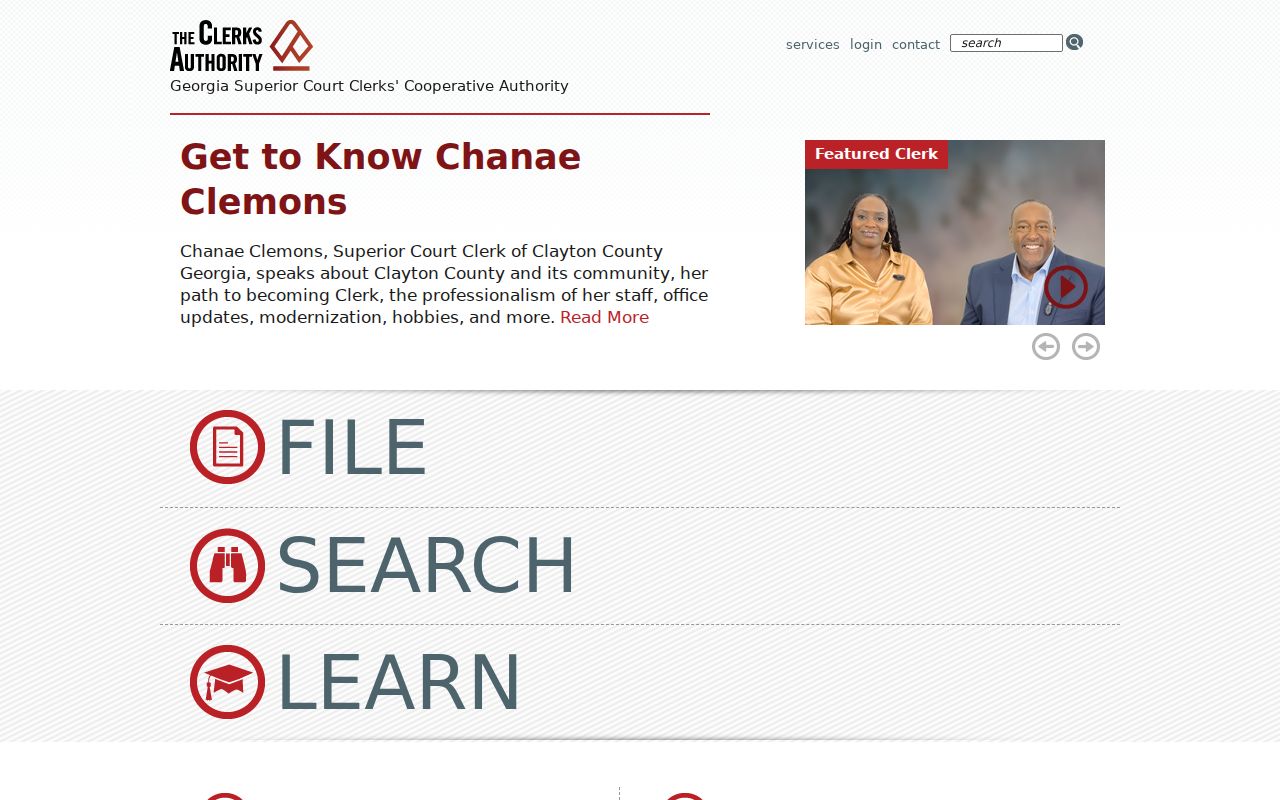
That gateway supports document service, but Worth County's clerk remains the office that can confirm the correct file and certification need.
What a Criminal Case File Contains
A Worth County criminal case file organizes events under a court case number. It does not necessarily repeat every field in the arrest report, jail record, or GCIC history. Review the docket first, then obtain the charging paper and final disposition for the charge-level story.
| Case number and court | The clerk identifier, division, filing date, and court with jurisdiction. |
|---|---|
| Charging document | The complaint, accusation, or indictment and the filed charge or statute. |
| Docket entries | Filings, motions, orders, attorney appearances, and other dated activity. |
| Hearing dates | Arraignment, motion, trial, sentencing, or other scheduled events. |
| Disposition and judgment | Plea, verdict, dismissal, nolle prosequi, no bill, acquittal, or conviction by charge. |
| Sentence and conditions | Custody, probation, fines, fees, restitution, and concurrent or consecutive terms. |
Sensitive identifiers, victim information, juvenile material, and sealed records may be redacted or unavailable. A public index may also show less than the complete clerk file.
Reading Worth County Case Outcomes
Georgia terms carry distinct results. An accusation is a prosecutor's formal charging paper often used without a grand-jury indictment. “Nolle prosequi” means the prosecutor formally declined to continue that charge. A “dead docket” suspends prosecution indefinitely and is not the same as a dismissal. A “no bill” means the grand jury did not return an indictment. An acquittal is a not-guilty verdict, while a conviction follows a guilty plea or verdict.
- Disposition
- The final or current outcome attached to a specific charge.
- Arraignment
- The hearing where filed charges are stated and a plea is entered.
- Certified copy
- A clerk-authenticated record used to prove the official court result.
- First Offender
- Georgia treatment that may end in discharge without adjudication after successful completion.
Read outcomes charge by charge. An arrest label may be amended, reduced, replaced by an accusation or indictment, or never filed. A single overall status can hide those differences.
Criminal Case Stages in Worth County
Worth County cases move from an allegation toward a court result in a set sequence, though not every case reaches trial. The prosecutor reviews the arrest material and decides what to file. Discovery and motions test the evidence and legal issues. A plea can end the contested phase, while a trial leads to a verdict. The judgment and sentence then create the disposition that should be reported to GCIC.
Case flow: Charges Filed › Arraignment › Pretrial › Plea or Trial › Disposition › Sentencing
Appeals and later sealing orders can add more entries. The court docket therefore remains useful long after a detainee has left the Worth County jail roster.
PeachCourt Access for Worth County
The official E-Access directory points Worth Superior and State Court records to PeachCourt. That referral does not guarantee that every criminal docket or document is open through an anonymous name search. An account gate prevented verification of public fields and a sample case, so no unconfirmed date span or search option should be assumed.
The captured PeachCourt source illustrates the filing and document platform named by Worth County research.

If PeachCourt does not reveal the needed Worth County case, contact the clerk rather than treating the missing online result as proof that no file exists.
Federal Cases Beyond Worth County
A federal prosecution is not kept as a Worth County Superior Court case. Worth County lies within the U.S. District Court for the Middle District of Georgia, and federal dockets are searched through PACER. PACER requires an account and generally charges $0.10 per page, subject to its quarterly fee-waiver threshold.
The official federal court sources in the image manifest mark this separate layer.
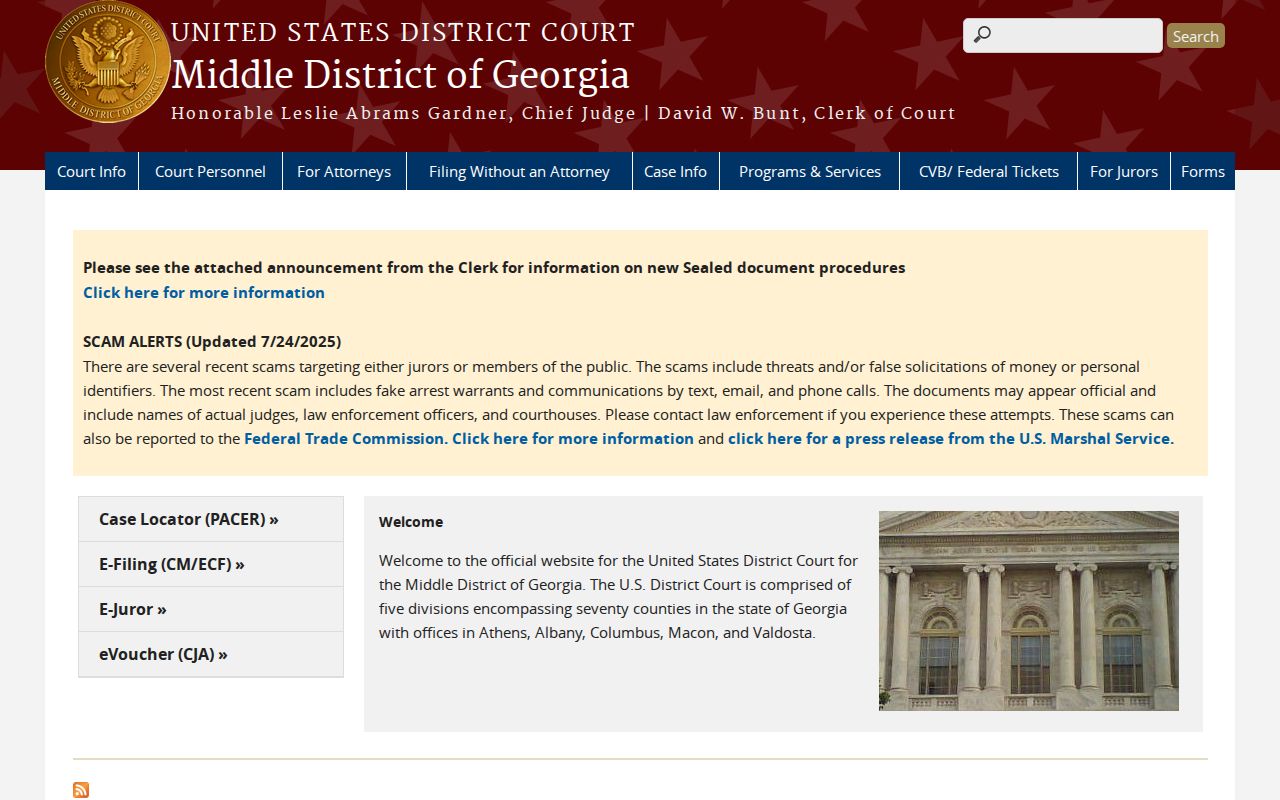
The district court page confirms the correct federal venue rather than a county clerk destination.
The PACER gateway provides the separate federal docket route.
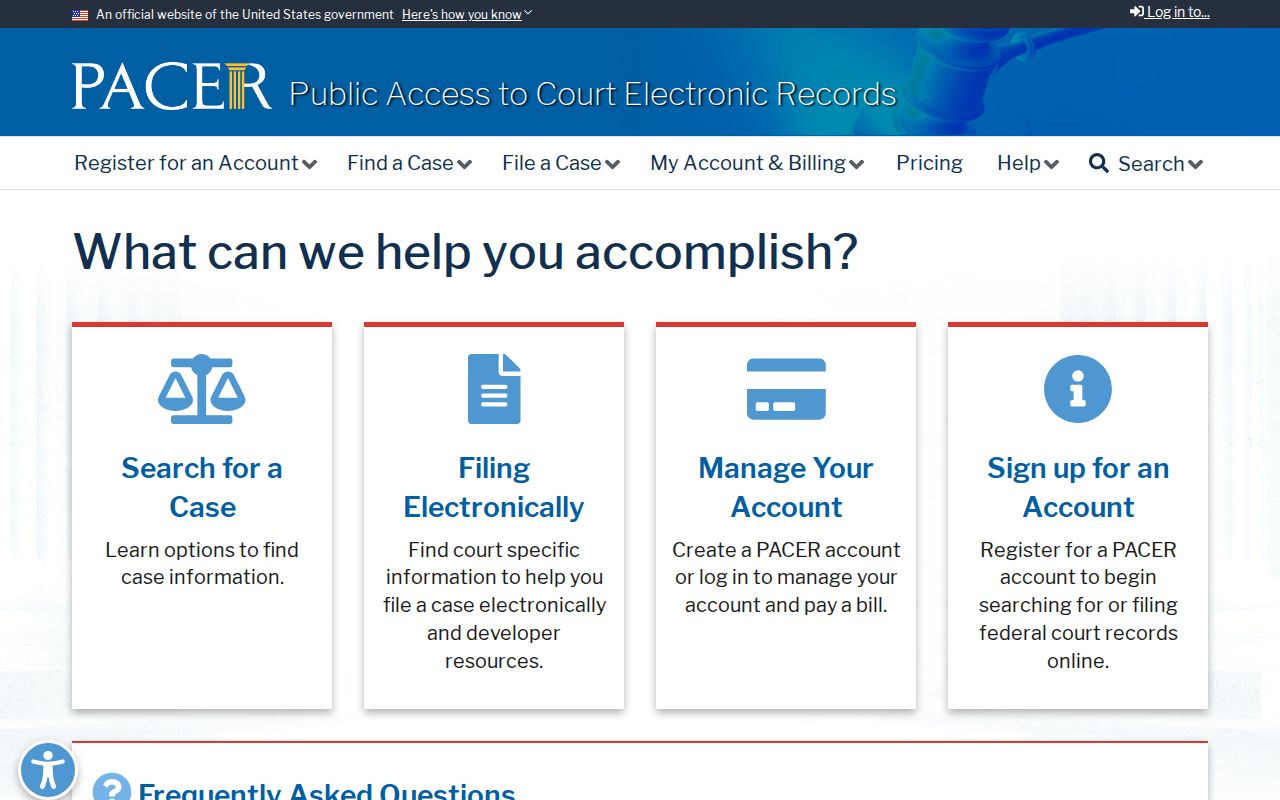
A result there should be read as a federal case file, not merged with a Worth County docket or sheriff booking entry.
Access Rules for Case Records
Georgia court records are generally open, but access is not absolute. Juvenile files, protected victim data, personal identifiers, and records sealed by court order may be withheld or redacted. An online view may reveal less than the paper or certified file. Ask the clerk whether the case exists and whether a legal restriction, archive format, or indexing issue explains a blank result.
The Georgia Open Records Act governs many agency records, yet court-file access also follows judicial rules and confidentiality laws. Request existing records, not explanations or a new compilation. When a GCIC history lacks a Worth County disposition, obtain the certified final action and ask the clerk whether it can transmit the correct outcome electronically.